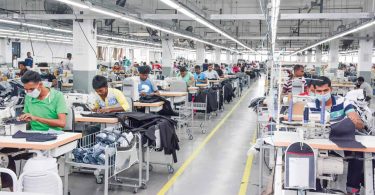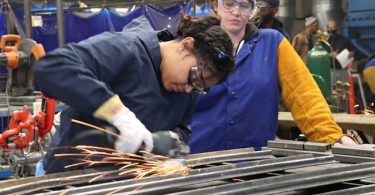


Germany remains one of Europe’s most attractive destinations for international workers seeking stable employment, reliable salaries, strong employee protections, and opportunities to build long-term careers. Its manufacturing sector supports automotive production, food processing, pharmaceuticals, engineering, electronics, packaging, logistics, metalwork, and consumer-goods production.
As German companies continue to recruit qualified workers from abroad, international applicants may find opportunities in production plants, warehouses, assembly facilities, and industrial companies. Depending on the position, experience, working hours, and shift allowances, some factory and manufacturing workers may earn gross salaries of approximately €2,400 to €3,500 per month.
However, applicants should understand that this is not a guaranteed salary for every vacancy. Entry-level positions may pay less, while experienced machine operators, production technicians, welders, maintenance workers, and shift supervisors may earn more. Salary advertisements should always state whether the amount is gross or net.
International applicants searching for factory worker jobs in Germany with visa sponsorship, Germany manufacturing jobs for foreigners, warehouse jobs in Germany, or production jobs with relocation support can use this guide to understand the employment requirements, visa options, health insurance system, expected salaries, and application process.
Why Consider Factory Worker Jobs in Germany?
Germany has one of the world’s largest and most advanced manufacturing sectors. Its factories produce vehicles, machinery, chemicals, electronics, medicines, food products, building materials, and household goods.
Foreign workers already play an important role in the German labour market. Germany’s Federal Employment Agency reported that employment growth covered by social security in 2024 was driven entirely by foreign nationals, whose number increased by approximately 253,000 to 5.58 million.
Factory jobs can be attractive because many positions offer:
- Regular monthly income
- Formal employment contracts
- Paid annual leave
- Health and social insurance
- Overtime opportunities
- Shift allowances
- Training and career progression
- Long-term employment prospects
- Possible relocation assistance
The exact benefits depend on the employer and should be written clearly in the employment contract.
Types of Factory Jobs Available in Germany
Germany’s industrial sector employs workers in many different roles. Some positions are suitable for entry-level applicants, while others require technical training, recognised qualifications, or previous experience.
Common factory and manufacturing vacancies include:
- Production Worker
- Factory Operative
- Assembly-Line Worker
- Machine Operator
- Packaging Worker
- Food-Processing Worker
- Warehouse Operative
- Forklift Operator
- Quality-Control Assistant
- Metal Production Worker
- Automotive Assembly Worker
- Electronics Assembler
- Welder
- Maintenance Technician
- CNC Machine Operator
- Production Technician
- Shift Supervisor
- Logistics Assistant
- Order Picker
- Industrial Cleaner
Applicants should read each job description carefully because “factory worker” can refer to many different duties and skill levels.
Industries Recruiting Factory Workers
International workers may find employment opportunities in industries such as:
Automotive manufacturing
Germany is internationally recognised for automobile and vehicle-component manufacturing. Workers may assemble parts, operate machinery, inspect components, package products, or support warehouse operations.
Food and beverage production
Food factories recruit workers for processing, packaging, labelling, quality control, cleaning, and production-line duties.
Pharmaceutical manufacturing
Pharmaceutical plants employ production workers, packaging assistants, machine operators, laboratory-support employees, and quality-control personnel.
Electronics production
Electronics manufacturers recruit workers to assemble, test, package, and inspect electronic parts and finished products.
Metal and machinery production
These positions may involve welding, cutting, machining, equipment operation, assembly, maintenance, and quality inspection.
Warehousing and logistics
Factories depend on warehouses for receiving raw materials, storing products, preparing orders, and dispatching finished goods.
Plastics and packaging
Packaging companies recruit machine operators, production assistants, quality inspectors, and warehouse employees.
Duties of a Factory Worker
Factory-worker responsibilities vary according to the employer and industry.
Typical duties may include:
- Operating production equipment
- Assembling products or components
- Packaging finished goods
- Checking products for defects
- Labelling cartons and containers
- Loading and unloading materials
- Preparing orders for dispatch
- Cleaning machinery and production areas
- Recording production information
- Reporting damaged equipment
- Following workplace safety procedures
- Meeting daily production targets
- Working with supervisors and team members
Technical positions may require employees to adjust machinery, interpret production instructions, perform basic maintenance, or monitor automated systems.
Can Foreigners Apply for Factory Jobs in Germany?
Yes. Foreign nationals can apply for jobs in Germany, but obtaining an employment offer does not automatically provide permission to work.
Citizens of European Union and European Economic Area countries generally have different employment rights from applicants from non-EU countries. Applicants from outside the EU usually need an appropriate visa or residence permit before beginning employment.
The correct immigration pathway depends on factors such as:
- The applicant’s nationality
- Professional or vocational qualifications
- Recognition of those qualifications
- Previous work experience
- The nature of the job offer
- The salary stated in the contract
- Whether the position qualifies as skilled employment
- Approval from the responsible authorities where required
Germany’s official “Make it in Germany” portal advises that applicants can search for employment from their home country and then apply for the relevant visa after receiving an offer of qualified employment.
What Does Visa Sponsorship Mean in Germany?
“Visa sponsorship” is commonly used in job advertisements, but the German process may be different from sponsorship systems used in some other countries.
A German employer can provide a genuine employment offer and the documents needed to support a work-visa application. The employer may also assist with immigration procedures or use the fast-track procedure for qualified workers.
Germany’s fast-track procedure allows employers to help accelerate the visa process for eligible skilled workers, but it does not remove the legal requirements or guarantee approval.
Applicants must still qualify for the appropriate immigration route and receive official permission before travelling to begin work.
Important Warning About Entry-Level Factory Jobs
Not every general labour, packing, cleaning, or warehouse vacancy qualifies for a German work visa.
Many German work-visa routes focus on qualified employment, meaning that the job normally requires professional skills obtained through vocational training or higher education. Applicants should not assume that every position advertised as an “unskilled factory job” can provide visa sponsorship.
Potentially stronger candidates include:
- Qualified machine operators
- Industrial mechanics
- Welders
- Electrical technicians
- Mechatronics technicians
- CNC operators
- Production technicians
- Maintenance specialists
- Professionally trained logistics workers
Applicants should verify the exact visa category before paying for translations, recognition procedures, travel, medical examinations, or recruitment services.
Visa for Professionally Experienced Workers
One possible pathway is Germany’s visa for professionally experienced workers. This route is aimed at certain applicants with recognised vocational or academic qualifications and relevant professional experience.
For 2026, Germany’s official portal states that this route generally requires a potential job with a gross annual salary of at least €45,630, unless an applicable collective agreement provides otherwise.
This equals approximately €3,802.50 gross per month. Therefore, a factory vacancy paying €2,400 to €3,500 monthly may not meet this particular salary requirement unless another rule, visa route, or collective-bargaining exception applies.
Applicants should compare their employment offer with the current requirements of the exact visa they intend to use.
Work Visa for Qualified Professionals
Applicants with recognised vocational or academic qualifications may qualify for a work visa for qualified professionals when they have a suitable job offer.
The employment generally needs to be qualified work. A simple production-helper position that requires no vocational knowledge may not qualify under this route.
Special salary rules may apply to workers above a certain age. Germany’s official information should be checked before submitting an application because thresholds and conditions can change.
Germany Opportunity Card
The Opportunity Card can allow eligible applicants to enter Germany to search for employment. It is not required for everyone, and applicants may instead search from abroad.
The Opportunity Card is not the same as an employer-sponsored work visa. Applicants must satisfy the applicable qualification, language, points, and financial-support requirements. Finding a job after entering Germany may also require changing to the appropriate residence permit before beginning full employment.
Salary: Can Factory Workers Earn €2,400–€3,500 Monthly?
Some factory and manufacturing workers may earn between €2,400 and €3,500 gross per month, but actual earnings depend on several factors:
- Occupation
- Qualifications
- Work experience
- Federal state
- Industry
- Collective agreement
- Employer
- Working hours
- Overtime
- Night shifts
- Weekend duties
- Bonuses
A general production assistant may earn less than an experienced industrial mechanic or CNC operator. Employees working nights, weekends, rotating shifts, or overtime may receive additional compensation.
Job seekers must distinguish between:
- Gross salary: Earnings before tax and social-security deductions
- Net salary: The amount received after deductions
German job advertisements normally state gross earnings. A gross salary of €3,000 does not mean that €3,000 will be deposited into the employee’s bank account.
Estimated Salary by Position
The following figures are broad examples and are not guaranteed offers:
| Position | Possible Gross Monthly Salary |
|---|---|
| Packaging Worker | €2,200–€2,800 |
| General Production Worker | €2,300–€3,000 |
| Warehouse Operative | €2,300–€3,100 |
| Food-Processing Worker | €2,300–€3,100 |
| Assembly-Line Worker | €2,400–€3,200 |
| Machine Operator | €2,600–€3,500 |
| Welder | €2,800–€4,000+ |
| Industrial Mechanic | €3,000–€4,300+ |
| Production Technician | €3,100–€4,500+ |
| Shift Supervisor | €3,500–€5,000+ |
Actual pay can fall outside these ranges. Applicants should rely on the written salary in the employer’s contract, not general online estimates.
Health Insurance for Factory Workers
Health insurance is compulsory in Germany. Most employees participate in the statutory health-insurance system and can select from different statutory insurance providers.
German social-security contributions are generally shared between the employee and employer and deducted through payroll. Eligible employees are registered for statutory schemes that may include:
- Health insurance
- Long-term care insurance
- Pension insurance
- Unemployment insurance
- Accident insurance
Germany’s official employment portal explains that employees benefit from the social-security system and are generally registered in statutory health, pension, accident, and unemployment insurance schemes.
Statutory health insurance helps cover services such as doctors’ appointments, many prescribed medicines, and certain treatments.
Therefore, “health insurance included” normally does not mean that an employer privately pays every medical expense. It usually means the worker is enrolled in the German insurance system and contributions are paid through employment.
Relocation Support
Some German employers help international recruits relocate, especially when hiring workers with technical or difficult-to-find skills.
Possible relocation assistance may include:
- Flight or travel contribution
- Temporary accommodation
- Help finding permanent housing
- Airport pickup
- Visa-document assistance
- Qualification-recognition support
- German-language courses
- Residence-registration assistance
- Help opening a bank account
- Support registering for health insurance
- Workplace orientation
Germany’s official portal encourages employers recruiting abroad to assist new employees with residence registration, health insurance, pension arrangements, and other administrative procedures.
However, relocation support is not a legal benefit automatically provided with every job. Applicants must confirm exactly what is included, whether it is free, and whether any cost will later be deducted from their salary.
Educational Requirements
Requirements depend on the position.
Entry-level employers may request:
- Secondary-school certificate
- High-school diploma
- Basic manufacturing experience
- Physical ability to perform the job
- Willingness to work shifts
Skilled positions may require:
- Vocational training
- Technical diploma
- Trade certificate
- Apprenticeship qualification
- Engineering qualification
- Relevant professional experience
- Formal recognition of foreign qualifications
Having a university degree does not automatically make someone eligible for a factory position. The qualification should be relevant to the job and immigration route.
Work-Experience Requirements
Some entry-level jobs provide workplace training and may not require previous manufacturing experience.
Technical positions commonly require experience in areas such as:
- Machine operation
- Welding
- Electrical maintenance
- Mechanical maintenance
- Quality control
- Automotive assembly
- Food production
- Warehouse logistics
- Forklift operation
- CNC machining
- Industrial production
Applicants should describe their experience clearly on their CV and include measurable responsibilities wherever possible.
German-Language Requirements
Language requirements vary.
Some international factories use English for selected technical teams, but many production environments operate mainly in German. Workers need to understand supervisors, machinery instructions, safety warnings, emergency procedures, and production records.
Applicants can improve their employment chances by learning German to at least an elementary or intermediate level.
German language knowledge is particularly valuable for:
- Understanding health-and-safety instructions
- Communicating with colleagues
- Completing workplace training
- Renting accommodation
- Attending official appointments
- Visiting medical facilities
- Progressing into supervisory positions
A vacancy that claims no German or English is required should be examined carefully, especially when it targets overseas applicants.
Skills Employers Look For
German manufacturing employers commonly value:
- Reliability
- Punctuality
- Attention to detail
- Teamwork
- Physical stamina
- Safety awareness
- Technical ability
- Willingness to learn
- Ability to follow instructions
- Basic problem-solving skills
- Good attendance
- Quality-control awareness
Applicants should include relevant examples of these skills in their CV rather than listing them without evidence.
Working Hours and Shift Patterns
Many German factories operate continuously. Employees may work:
- Morning shifts
- Afternoon shifts
- Night shifts
- Rotating shifts
- Weekend shifts
- Public-holiday shifts
The employment contract should state:
- Weekly working hours
- Shift schedule
- Basic salary
- Overtime rate
- Night-shift allowance
- Weekend compensation
- Break entitlement
- Annual leave
- Probation period
Applicants should not accept a contract they do not understand.
Employee Benefits
Depending on the employer and collective agreement, benefits may include:
- Paid annual leave
- Health and social insurance
- Pension contributions
- Overtime compensation
- Night-shift allowance
- Weekend allowance
- Paid sick leave
- Workplace accident insurance
- Training opportunities
- Work clothing
- Safety equipment
- Subsidised meals
- Transport assistance
- Holiday or Christmas bonuses
- Relocation assistance
Not every company offers every benefit. The written contract is the most reliable source.
Documents Required to Apply
Applicants may need to prepare:
- Valid passport
- Professional CV
- Cover letter
- Educational certificates
- Vocational qualifications
- Employment references
- Training certificates
- Language certificate where requested
- Qualification-recognition documents
- Police clearance where required
- Medical documentation where required
- Passport photographs
- Signed employment contract
- Visa application documents
Documents not issued in German may need certified translation.
How to Prepare a German-Style CV
A German CV should be clear, factual, and easy to read.
Include:
- Full name and contact information
- Professional summary
- Employment history
- Education and vocational training
- Technical skills
- Machinery or equipment experience
- Language ability
- Relevant certificates
- Availability to relocate
For each previous job, mention the machinery used, products manufactured, production targets, safety responsibilities, and quality-control experience.
Do not include false qualifications or invented employment history. German employers may request supporting records or contact former employers.
How to Apply for Factory Jobs in Germany
A practical application process may follow these steps:
Step 1: Identify suitable positions
Focus on vacancies that match your qualifications and experience. Applicants needing a work visa should prioritise qualified manufacturing positions rather than assuming that every general-labour vacancy provides immigration support.
Step 2: Prepare your documents
Create a professional CV and collect certificates, references, and identification documents.
Step 3: Search through reliable channels
The German Federal Government’s “Make it in Germany” portal operates a job-listing service for international candidates.
The International and Specialized Services, known as ZAV, is the Federal Employment Agency’s official contact point for recruiting qualified foreign workers.
Applicants may also use verified company career pages and reputable recruitment agencies.
Step 4: Submit a tailored application
Adjust your CV and cover letter for each position. Mention your qualifications, experience, language ability, and willingness to relocate.
Step 5: Attend an interview
Interviews may be held by telephone or video. Be prepared to discuss your experience, machinery knowledge, shift availability, and visa situation.
Step 6: Review the job offer
Check the salary, working hours, location, duties, probation period, benefits, accommodation, and relocation terms.
Step 7: Confirm visa eligibility
Compare the offer with the official requirements for your intended visa category.
Step 8: Submit the visa application
Follow the instructions provided by the responsible German mission and immigration authorities.
Step 9: Travel only after approval
Do not resign from secure employment, book a non-refundable flight, or travel to begin work before receiving the necessary permission.
Best German Regions for Factory Jobs
Germany has manufacturing opportunities throughout the country.
Major industrial regions include:
- Bavaria
- Baden-Württemberg
- North Rhine-Westphalia
- Lower Saxony
- Hesse
- Saxony
- Rhineland-Palatinate
- Thuringia
- Saarland
- Brandenburg
Cities and industrial areas with manufacturing activity include:
- Munich
- Stuttgart
- Hamburg
- Frankfurt
- Cologne
- Düsseldorf
- Leipzig
- Dresden
- Wolfsburg
- Hanover
- Bremen
- Dortmund
Smaller cities may offer lower living costs than Munich, Frankfurt, or Hamburg.
Cost of Living
A salary that appears attractive may provide different purchasing power depending on the location.
Major expenses include:
- Rent
- Electricity and utilities
- Food
- Public transportation
- Telephone and internet
- Insurance contributions
- Taxes
- Personal expenses
Workers should calculate their expected net salary and compare it with housing costs before accepting an offer.
Can You Bring Your Family?
Family-reunification possibilities depend on the worker’s residence permit, income, housing, and other legal requirements.
Applicants should not assume that every factory-worker visa automatically permits immediate family relocation. The conditions must be checked against the specific residence permit.
Career Progression
Factory employment can lead to better positions when workers gain experience, technical skills, and German-language ability.
Possible progression includes:
- Senior Production Worker
- Machine Operator
- CNC Operator
- Maintenance Technician
- Quality-Control Inspector
- Team Leader
- Shift Supervisor
- Production Planner
- Warehouse Supervisor
- Manufacturing Manager
Completing additional vocational training may improve long-term employment prospects.
How to Identify Recruitment Scams
International job seekers should be careful because fraudulent recruiters often advertise unrealistic German jobs.
Warning signs include:
- Guaranteed visa approval
- No interview or assessment
- Extremely high salary for simple work
- Payment demanded through cryptocurrency or gift cards
- A recruiter using only a personal messaging account
- No verifiable company website
- A contract containing spelling errors or inconsistent company details
- Requests to pay for a work permit directly to the employer
- Pressure to send money immediately
- Claims that no documents or qualifications are required
- Requests to travel using a tourist visa and begin working
A genuine job offer should identify the employer, duties, salary, working hours, location, and employment conditions.
Common Application Mistakes
Applicants frequently weaken their chances by:
- Using one CV for every vacancy
- Applying for jobs unrelated to their qualifications
- Failing to explain their machinery experience
- Ignoring German-language requirements
- Submitting incomplete documents
- Providing incorrect information
- Paying unverified agents
- Assuming every vacancy provides visa sponsorship
- Failing to calculate net income and living expenses
A careful and targeted application is more effective than sending hundreds of incomplete applications.
Frequently Asked Questions
Can foreigners apply for factory jobs in Germany in 2026?
Yes. Foreign workers can apply, but non-EU applicants generally need an appropriate visa or residence permit. The job must satisfy the conditions of the intended immigration pathway.
Can factory workers earn €2,400–€3,500 per month?
Some factory workers may earn within this gross monthly range. Actual salaries depend on occupation, experience, employer, region, collective agreement, shift allowances, and overtime.
Is €3,500 a net salary?
Usually, advertised German salaries are gross amounts before taxes and social-security deductions. Applicants should request a net-salary estimate based on their individual situation.
Do factory jobs provide free health insurance?
Employees are normally covered through Germany’s health-insurance system, but contributions are generally paid through payroll rather than every service being completely free. Most employees use statutory health insurance.
Do German employers provide relocation support?
Some employers provide relocation assistance, but it is not guaranteed. Support may include temporary accommodation, immigration assistance, travel contribution, language courses, or help completing registration.
Can an unskilled factory worker receive visa sponsorship?
It may be difficult because many German work-visa routes require qualified employment, recognised training, relevant experience, or a minimum salary. Applicants should verify the requirements for the specific job and visa.
Do I need to speak German?
Not every vacancy requires fluent German, but language skills significantly improve workplace safety, communication, daily life, and career progression.
Is accommodation included?
Some employers provide temporary accommodation or help workers find housing. Applicants should check whether accommodation is free, subsidised, shared, or deducted from salary.
Can I apply without using an agent?
Yes. Applicants can apply directly through verified company websites, the official “Make it in Germany” job listings, or employment services.
Does a job offer guarantee a work visa?
No. Visa approval is decided by the responsible German authorities. A job offer supports an application but does not guarantee approval.
Final Thoughts
Factory worker jobs in Germany can provide stable salaries, formal employment, health and social insurance, technical training, and long-term career opportunities. Workers in production, automotive manufacturing, food processing, warehousing, machine operation, welding, and industrial maintenance may find vacancies across the country.
The advertised figure of €2,400 to €3,500 per month should be treated as a possible gross salary range rather than a guaranteed payment. Skilled technical workers and employees receiving overtime or shift allowances may earn more, while entry-level workers may earn less.
Applicants requiring visa sponsorship should focus on legitimate employers, qualified positions, and immigration pathways matching their education and professional experience. They should also confirm whether any promised relocation package includes accommodation, travel costs, visa assistance, or administrative support.
A genuine opportunity will come with a verifiable employer, a detailed contract, transparent salary information, and a lawful visa process. Never pay an unverified recruiter for a guaranteed job or work visa.