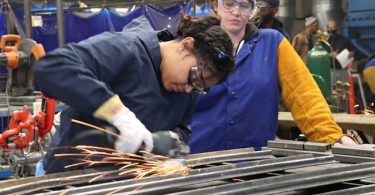
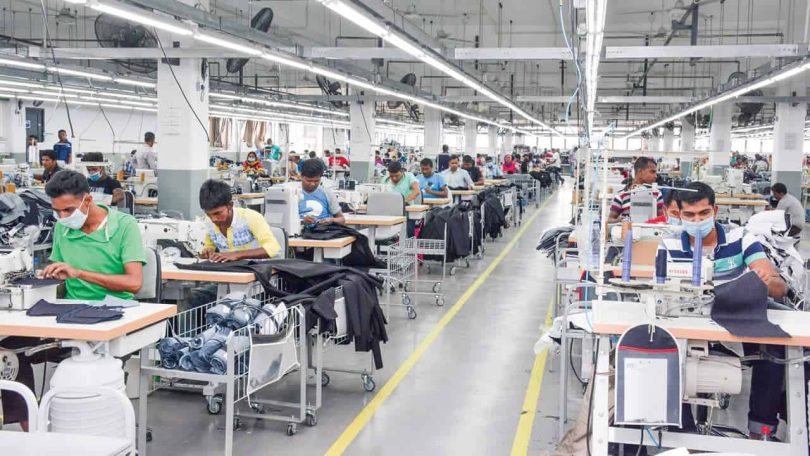

The United Kingdom has a large manufacturing and processing industry that employs workers in food production, automotive assembly, pharmaceuticals, engineering, packaging, textiles, chemicals, plastics, warehousing, and logistics.
For international job seekers, searches such as UK factory worker jobs with visa sponsorship, manufacturing jobs in the UK for foreigners, production operative jobs with sponsorship, and warehouse jobs in the UK remain popular.
However, applicants must understand an important point before applying: not every factory job qualifies for UK visa sponsorship.
Basic positions such as packing, sorting, general production work, cleaning, and warehouse picking may be available to people who already have permission to work in the UK, but many of these jobs do not meet the skill or salary requirements for a new Skilled Worker visa.
Foreign applicants needing sponsorship should therefore focus on eligible technical and skilled manufacturing positions, including engineering technicians, production technicians, quality-assurance technicians, maintenance specialists, and other qualified industrial roles.
This guide explains the types of factory jobs available, expected salaries, visa-sponsorship requirements, eligibility rules, application process, required documents, and how to avoid fraudulent recruitment offers.
Why Work in the UK Manufacturing Industry?
The UK manufacturing sector produces food, vehicles, medicines, chemicals, machinery, electronics, clothing, aerospace components, plastics, and consumer products.
Manufacturing companies require workers to operate machinery, assemble products, maintain equipment, inspect finished goods, manage production schedules, and move materials through warehouses.
Depending on the employer and occupation, factory workers may benefit from:
- Regular wages
- Full-time employment contracts
- Paid annual leave
- Workplace pension contributions
- Overtime opportunities
- Night-shift allowances
- Training and professional development
- Protective clothing and safety equipment
- Career progression
- Relocation assistance in selected cases
The exact benefits must be confirmed in the written employment contract.
Types of Factory Jobs Available in the UK
Factory employment covers many occupations with different responsibilities and qualification requirements.
Common roles include:
- Production Operative
- Manufacturing Worker
- Assembly-Line Worker
- Machine Operator
- Food-Production Operative
- Packaging Operative
- Warehouse Operative
- Order Picker
- Automotive Assembly Worker
- Engineering Operative
- Chemical-Plant Process Operator
- Textile Operative
- Quality-Control Inspector
- Quality-Assurance Technician
- Production Technician
- Maintenance Technician
- CNC Machine Operator
- Welder
- Electrical Technician
- Mechanical Technician
- Production Supervisor
- Process Engineer
Entry-level production roles may require little previous experience. Technical occupations usually require vocational training, professional qualifications, or significant work experience.
What Does a Factory Worker Do?
A factory worker’s responsibilities depend on the type of product being manufactured.
Typical duties may include:
- Operating production machinery
- Assembling parts or finished products
- Packing goods into containers
- Labelling products
- Inspecting products for defects
- Monitoring production quality
- Loading raw materials
- Moving goods into storage
- Cleaning equipment and work areas
- Recording production information
- Reporting equipment problems
- Following health-and-safety procedures
- Meeting production targets
- Working with supervisors and other employees
Technical workers may also perform equipment maintenance, interpret production drawings, adjust machinery, test products, or supervise automated production systems.
UK Industries That Employ Factory Workers
Food and beverage manufacturing
Food factories employ workers to prepare, process, package, label, inspect, and store products.
Positions may be available in:
- Bakeries
- Meat-processing plants
- Dairy factories
- Beverage-production facilities
- Frozen-food factories
- Fruit and vegetable processing
- Ready-meal production
Automotive manufacturing
Automotive factories recruit assembly workers, machine operators, engineering technicians, quality inspectors, welders, maintenance staff, and logistics workers.
Pharmaceutical manufacturing
Pharmaceutical companies require trained workers for production, packaging, equipment operation, quality assurance, laboratory support, and regulatory compliance.
Engineering and machinery
Engineering factories employ machine operators, CNC technicians, welders, fabricators, mechanical technicians, electrical technicians, and maintenance workers.
Chemical production
Chemical-production facilities may recruit plant-process operators, laboratory technicians, production specialists, maintenance employees, and safety personnel.
Warehousing and distribution
Factories rely on warehouse workers to receive raw materials, prepare orders, manage stock, package finished products, and arrange distribution.
Can Foreigners Apply for UK Factory Jobs?
Yes. Foreign nationals can apply for factory jobs in the UK.
However, applicants fall into two broad groups:
- People who already have permission to work in the UK
- People who need an employer to sponsor a work visa
Applicants who already hold valid UK work rights may apply for a wider range of factory, warehouse, and production jobs.
Applicants applying from overseas usually need:
- A job offer from an approved UK sponsor
- An eligible occupation
- A Certificate of Sponsorship
- The required salary
- The necessary skills and qualifications
- Evidence of English-language ability
- Sufficient maintenance funds where applicable
- A successful visa application
A job offer alone does not guarantee that a visa will be approved.
Understanding UK Visa Sponsorship
A company cannot simply promise sponsorship without meeting Home Office requirements.
For a Skilled Worker visa, the applicant must normally have a confirmed job offer from a UK employer approved by the Home Office. The employer assigns the worker a Certificate of Sponsorship containing information about the job and salary.
The UK government maintains an official register of licensed Worker and Temporary Worker sponsors. The register was updated on July 27, 2026, and applicants can use it to check whether an employer is licensed to sponsor overseas workers.
Being listed as a licensed sponsor does not mean that a company is currently recruiting factory workers. Applicants must still find a genuine vacancy and meet its requirements.
Are General Factory Workers Eligible for Sponsorship?
Many general factory jobs are unlikely to qualify for new Skilled Worker sponsorship.
Since July 22, 2025, Skilled Worker positions normally need to be skilled to graduate level, unless the occupation appears on an approved exception list such as the Temporary Shortage List or Immigration Salary List.
The UK occupation system includes factory-related job titles such as food-production operatives, textile-process operatives, and plastics-process operatives. However, the appearance of a job title in the occupation classification does not automatically mean that it qualifies for new sponsorship. Applicants must check the occupation’s current eligibility status.
This means that positions such as the following may be difficult to obtain from overseas with sponsorship:
- General packer
- Basic production helper
- Factory cleaner
- Warehouse picker
- General assembly worker
- Unskilled food-production worker
- Basic textile operative
These jobs may still be open to people who already have the right to work in the UK.
Factory-Related Jobs with Better Sponsorship Prospects
Foreign applicants needing sponsorship should focus on qualified roles such as:
- Engineering Technician
- Quality-Assurance Technician
- Planning Technician
- Process Technician
- Production Technician
- Electrical Technician
- Mechanical Technician
- Maintenance Engineer
- Manufacturing Engineer
- Production Engineer
- Specialist CNC Operator
- Skilled Welder or Fabricator
- Chemical-Process Specialist
- Automation Technician
- Robotics Technician
Certain medium-skilled technical occupations may appear on the Temporary Shortage List.
For example, the official list includes:
- Engineering technicians
- Quality-assurance technicians
- Planning, process and production technicians
Each occupation has its own salary requirement and conditions.
Skilled Worker Visa Requirements
To qualify for a Skilled Worker visa, applicants generally need:
- A genuine job offer
- An approved sponsoring employer
- A Certificate of Sponsorship
- An eligible occupation code
- The required salary
- The required English-language ability
- Valid identity and travel documents
- Evidence of available maintenance funds where required
Applicants are awarded points for sponsorship, an eligible job, English-language ability, and applicable salary conditions.
Skilled Worker Salary Requirement in 2026
In 2026, the standard Skilled Worker salary threshold is generally £41,700 per year, although different thresholds may apply depending on the occupation, applicant, going rate, or eligible discount.
Applicants usually need to be paid at least:
- The applicable general salary threshold
- The required going rate for the occupation
The higher applicable requirement normally determines eligibility.
Jobs on the Immigration Salary List may use a lower threshold. The government states that an applicant sponsored for a job on that list must generally earn at least £33,400 per year and meet the applicable going rate.
Some technical factory-related occupations on the Temporary Shortage List have different published rates. For example, the listed standard rate for planning, process and production technicians is £34,800 annually, while other salary arrangements may apply to eligible applicants under specific rules.
Salary rules are detailed and can change. Applicants must check both the occupation code and the applicable salary table before accepting an offer.
Average Factory Worker Salaries in the UK
General factory and production workers usually earn less than the main Skilled Worker salary threshold.
The National Careers Service provides the following broad salary estimates:
| Occupation | Estimated Annual Salary |
|---|---|
| Food Factory Worker | £21,000–£28,000 |
| Manufacturing Production Worker | £22,000–£28,000 |
| Warehouse Worker | £21,000–£30,000 |
| Car Manufacturing Worker | £22,000–£32,000 |
| Engineering Operative | £22,000–£33,000 |
| Chemical-Plant Process Operator | £22,000–£34,000 |
| Textile Operative | £22,000–£29,000 |
These are broad career estimates rather than guaranteed wages. Actual earnings depend on experience, location, shifts, overtime, qualifications, and employer.
More specialised workers, technicians, engineers, supervisors, and managers may earn significantly more.
UK Minimum Wage in 2026
From April 1, 2026, the UK minimum hourly rates are:
| Worker Category | Minimum Hourly Rate |
|---|---|
| Age 21 and over | £12.71 |
| Age 18 to 20 | £10.85 |
| Under 18 | £8.00 |
| Apprentice rate | £8.00 |
The rates normally change each April.
Minimum-wage eligibility does not mean a job qualifies for visa sponsorship. A sponsored position must also meet the salary and occupation requirements of the relevant immigration route.
Gross Salary Versus Take-Home Pay
UK job advertisements generally show gross salary.
Gross salary is the amount before deductions such as:
- Income tax
- National Insurance
- Workplace pension contributions
- Other authorised deductions
Take-home pay is the amount deposited into the employee’s bank account after deductions.
Applicants should not assume that an advertised annual salary divided by 12 represents their exact monthly take-home pay.
Working Hours and Shift Patterns
Factory and warehouse employees may work:
- Morning shifts
- Afternoon shifts
- Night shifts
- Rotating shifts
- Weekend shifts
- Bank holidays
- Overtime
The National Careers Service indicates that many production workers work approximately 40 to 48 hours per week, depending on the occupation and employer.
Before accepting a position, check:
- Contracted weekly hours
- Basic hourly rate
- Overtime rate
- Night-shift allowance
- Weekend allowance
- Break entitlement
- Holiday entitlement
- Probation period
- Contract duration
Employee Benefits
A factory employment package may include:
- Paid annual leave
- Workplace pension
- Paid sick leave where eligible
- Overtime payments
- Shift allowances
- Training
- Protective equipment
- Uniforms
- Employee discounts
- Subsidised meals
- Transport assistance
- Relocation support
Not every employer provides all these benefits.
Applicants should obtain the details in writing rather than relying on verbal promises.
Healthcare and the Immigration Health Surcharge
Most Skilled Worker visa applicants must pay the Immigration Health Surcharge as part of their visa application.
The current standard surcharge shown by the government is £1,035 for each year of the visa. Applicants may also need to pay an application fee and demonstrate that they have at least £1,270 available for maintenance unless the employer certifies support.
After paying the required surcharge and receiving the visa, an applicant can generally use the National Health Service from the visa’s start date, subject to the relevant NHS rules and charges.
A job advertisement claiming “free healthcare” should therefore be interpreted carefully. The employer may offer private medical insurance, but ordinary Skilled Worker applicants usually pay the Immigration Health Surcharge during the visa application process.
Relocation Support
Some UK manufacturers provide relocation assistance for hard-to-fill technical positions.
Support may include:
- Flight contribution
- Temporary accommodation
- Airport pickup
- Help finding permanent housing
- Visa guidance
- Certificate of Sponsorship
- Qualification-recognition assistance
- Workplace induction
- Transport assistance
- Family-relocation guidance
Relocation assistance is not automatically provided with every sponsored job.
Applicants should confirm:
- What the employer pays
- What the employee must pay
- Whether accommodation is free
- How long accommodation is provided
- Whether any cost will be deducted from wages
- Whether repayment is required if the employee leaves early
Educational Requirements
Entry-level factory jobs may not require a university degree.
Employers may accept:
- Secondary-school qualifications
- Vocational certificates
- Apprenticeship qualifications
- Technical diplomas
- Relevant work experience
- Machinery-operation certificates
- Health-and-safety training
Technical sponsored positions may require:
- A relevant degree
- Higher National Diploma
- Vocational or trade qualification
- Engineering certification
- Apprenticeship completion
- Several years of professional experience
The applicant’s qualifications should match the responsibilities of the sponsored position.
Experience Requirements
Some employers train entry-level workers, while technical jobs may require experience in:
- Production-line operation
- Machine maintenance
- CNC machinery
- Welding and fabrication
- Electrical systems
- Mechanical repair
- Quality assurance
- Food-production safety
- Chemical processing
- Automotive manufacturing
- Warehouse management
- Production planning
Applicants should describe their previous responsibilities clearly in their CV.
Instead of writing only “factory worker,” explain:
- The machines operated
- Products manufactured
- Daily production targets
- Quality-control responsibilities
- Safety procedures followed
- Supervisory duties
- Improvements achieved
English-Language Requirement
Applicants for the Skilled Worker route usually need to demonstrate the required level of English unless they qualify for an exemption.
Evidence may include:
- An approved English-language test
- An eligible qualification taught in English
- A qualifying UK educational award
- Nationality from an exempt English-speaking country
The exact requirement should be checked on the official visa guidance before applying.
Documents Required
Applicants may need:
- Valid passport
- Certificate of Sponsorship reference
- Job offer or employment contract
- Proof of English-language ability
- Educational certificates
- Vocational qualifications
- Updated CV
- Employment references
- Bank statements where required
- Criminal-record certificate where applicable
- Tuberculosis test certificate where applicable
- Marriage and birth certificates for dependants
- Certified translations of documents not in English or Welsh
The required documents depend on the applicant’s circumstances.
How to Prepare a UK-Style CV
A UK CV should be professional, easy to read, and tailored to the vacancy.
Include:
- Full name and contact information
- Professional summary
- Employment history
- Education and training
- Technical skills
- Machinery experience
- Safety certificates
- Language ability
- Professional references where requested
- Willingness to relocate
Do not include false qualifications or employment history.
How to Find UK Factory Jobs with Sponsorship
Search for eligible occupations
Do not begin by applying for every vacancy containing the words “factory worker.”
First determine whether the position has an eligible occupation code.
Technical job titles are more likely to qualify than basic production roles.
Check the employer’s sponsor licence
Confirm that the company appears on the official register of licensed sponsors.
Use official company career pages
Large manufacturers normally publish vacancies on their official websites.
Search reputable job platforms
Use established recruitment platforms, but verify each vacancy directly with the employer.
Read the sponsorship wording carefully
Useful phrases include:
- Skilled Worker sponsorship available
- Certificate of Sponsorship available
- Applicants requiring sponsorship considered
- Visa support available for qualified candidates
“Right to work in the UK required” usually means the employer is not offering sponsorship.
Application Process
A typical application may follow these steps:
Step 1: Identify an eligible position
Choose a role matching your qualifications and professional experience.
Step 2: Confirm sponsorship availability
Check that the employer is licensed and willing to sponsor the specific position.
Step 3: Prepare your application
Submit a tailored CV, cover letter, certificates, and requested documents.
Step 4: Complete the interview
The interview may cover:
- Technical experience
- Machinery knowledge
- Safety procedures
- Shift availability
- English communication
- Willingness to relocate
- Visa requirements
Step 5: Receive a formal offer
The offer should include the job title, salary, duties, working hours, location, and employment conditions.
Step 6: Receive the Certificate of Sponsorship
The licensed employer assigns the certificate after completing the required sponsorship procedures.
Step 7: Apply for the visa
Complete the Skilled Worker visa application and provide the necessary evidence.
Step 8: Wait for the official decision
Do not travel to begin employment before receiving the required permission.
Best UK Locations for Manufacturing Jobs
Manufacturing opportunities are available throughout the UK.
Major industrial areas include:
- West Midlands
- East Midlands
- North West England
- North East England
- Yorkshire and the Humber
- South Wales
- Central Scotland
- Northern Ireland
Cities and industrial areas with manufacturing activity include:
- Birmingham
- Coventry
- Derby
- Leicester
- Manchester
- Liverpool
- Sheffield
- Leeds
- Newcastle
- Sunderland
- Bristol
- Cardiff
- Glasgow
- Belfast
Living costs vary significantly. London and parts of southern England are generally more expensive than many northern and Midlands locations.
Common Recruitment Scams
Job seekers should avoid offers involving:
- Guaranteed visa approval
- Guaranteed permanent residence
- Payment for a Certificate of Sponsorship
- Interviews conducted only through informal messaging apps
- Requests for cryptocurrency or gift cards
- Unusually high salaries for basic packing work
- No employment interview
- No verifiable company address
- Fake sponsor-licence documents
- Contracts with inconsistent company names
- Requests to enter as a tourist and begin working
- Pressure to pay immediately
A genuine employer will not guarantee that the Home Office will approve a visa.
Common Application Mistakes
Applicants often reduce their chances by:
- Applying for ineligible general-labour positions
- Failing to check the sponsor register
- Using an incomplete CV
- Applying without relevant qualifications
- Ignoring salary requirements
- Sending the same application to every employer
- Paying unverified recruitment agents
- Providing false experience
- Failing to prepare for interviews
- Confusing gross salary with take-home pay
Tips to Improve Your Chances
To strengthen your application:
- Obtain relevant technical qualifications.
- Gain manufacturing experience.
- Learn machine operation or maintenance.
- Complete recognised health-and-safety training.
- Prepare a professional UK-style CV.
- Apply for technical rather than purely general roles.
- Check the occupation code before applying.
- Confirm the employer’s sponsor licence.
- Follow application instructions carefully.
- Keep all supporting documents organised.
Frequently Asked Questions
Can foreigners apply for UK factory jobs in 2026?
Yes. Foreign nationals can apply, but those without existing UK work rights need an eligible position and an approved sponsoring employer.
Do all factory jobs offer visa sponsorship?
No. Many basic production, packing, and warehouse jobs do not qualify for new Skilled Worker sponsorship.
Which factory jobs have better sponsorship prospects?
Engineering, maintenance, quality assurance, process technology, production planning, and specialised technical positions generally have stronger prospects than basic general-labour roles.
How much do UK factory workers earn?
General factory workers may earn approximately £21,000 to £34,000 annually, depending on the occupation, experience, shifts, and employer. Technical workers and supervisors may earn more.
What is the UK minimum wage in 2026?
From April 1, 2026, the minimum rate for workers aged 21 and over is £12.71 per hour. Lower age-based and apprentice rates apply.
Does a minimum-wage factory job qualify for sponsorship?
Usually not. Visa eligibility depends on the occupation, skill level, annual salary, going rate, and other immigration requirements.
Is accommodation provided?
Some employers may offer temporary accommodation or relocation assistance, but this is not guaranteed.
Can I bring my family?
Eligible Skilled Worker visa holders may be able to bring qualifying dependants, subject to the immigration rules applying to their occupation and circumstances.
Does a job offer guarantee a visa?
No. The Home Office makes the visa decision. An employment offer and Certificate of Sponsorship support the application but do not guarantee approval.
Can I apply without a recruitment agent?
Yes. Applicants can apply directly through official employer career pages and reputable job platforms.
Final Thoughts
UK factory jobs can provide stable employment, valuable industrial experience, overtime opportunities, training, and career progression. However, international applicants must distinguish between ordinary factory vacancies and positions that genuinely qualify for visa sponsorship.
Many general production, packing, warehouse, and food-processing jobs are available mainly to applicants who already have permission to work in the UK. Overseas candidates seeking sponsorship should concentrate on technical manufacturing roles such as engineering, maintenance, quality assurance, production technology, and specialised machine operation.
Before applying, verify the occupation code, salary requirement, employer’s sponsor licence, job description, and employment contract. Never pay for a guaranteed visa, fake sponsorship certificate, or employment offer.
With relevant qualifications, genuine experience, a professional CV, and careful research, eligible applicants can improve their chances of securing a legitimate manufacturing job in the United Kingdom.